OPEN LETTER: Accountability Checked Out, Part Two
It's gotten much worse...so this is also my retirement notice

HIGHLIGHTS IN BRIEF:
TVDSB turfs another 5,000 books from just one Library (10,000 in total), poof
TVDSB turfs thousands of functional computers, poof
TVDSB places unqualified VPs in Library lines at multiple secondary schools, taking jobs from qualified teachers, poof
TVDSB claims a commitment to equitable “access to resources” … really?
retirement and freedom, here I come!
“You can find a problem in any book, but there are so many ideas in these books that your children will never experience or learn from if you don’t let them read.”
– ‘Abbott Elementary’ Tackles School Book Bans in Important Message Episode, S4E16, “Books,” aired March 5, 2025
https://www.tvinsider.com/1180058/abbott-elementary-season-4-book-ban-episode/
If the reader hasn’t already, consider reading the first part, for further background and context. It’s long. It’s not necessary, but recommended.
To summarise, it outlines historical staffing for secondary school Libraries, and the alarming incursion of the so-called “Inclusive Libraries Collection Revitalization Project” and the ‘deselection’ of books, which is just a fancy public relations and politically-correct euphemism for censorship, which resulted, at the time of writing Part One in January 2025, in the purging of over 5,000 books from the Beal Library (and more in other school Libraries).
More details here:
Part One was a first step to put these issues on the public record, but was intentionally not widely distributed. It still drew the ire of the powers that (shouldn’t) be. Shocking, and not-so-shocking but equally unacceptable, subsequent events have necessitated a follow-up, and a career-concluding decision.
So Part Two, below, is an open letter to reveal to the wider public community what really transpires under the guise of “inclusive Libraries” and the cloak of “confidentiality,” as well as some additional items of importance and relevance the public has a right to know.
This open letter also serves as my retirement notice to the employer.
As such, I take this opportunity to bid a fond farewell to my amazing and dedicated teacher colleagues and education friends, and wish each of them all the best navigating the appalling, constricting, stifling and suffocating indoctrination gulag public education has become, a reality that many of us like-minded folk in the classroom have discretely lamented among one another.
My hope is that teachers will continue to be truth revolutionaries in an era of unprecedented universal deceit and decline, to paraphrase what’s mistakenly attributed to George Orwell. That said, the Orwell-esque plague of GROUPTHINK is definitely flourishing.
So in the spirit of truth, and because my former employer is a public entity and I believe in full public accountability and full transparency, let’s begin…
The Letter
William Tucker
Director of Education
Thames Valley District School Board
Dear Mr. Tucker,
As a consequence of my attempt to bring clarity, public accountability and transparency to my area of expertise in a public secondary school Library context, I have been punished on multiple fronts, ostensibly in an attempt to silence me, and to force me into obedience and compliance.
When confronted with this level of interference detrimental to the foundational precepts of educating children and youth entrusted to our care to become independent, literate, critical thinkers and doers, I will neither be silenced nor forced or extorted or intimidated into ‘compliance.’
What follows is a further accounting of the events contributing to compelling me to defend school Libraries, and more importantly, the protection of fundamental rights including the freedom to read, and the resulting attempts by the board and school administrations to trounce on those rights.
While I enjoyed the bulk of my career and the interaction with students, the past five years contending with meddlesome and progressively ill-equipped, uninspiring, often unskilled and lacking leadership qualities and most importantly ideologically-driven rather than pedagogically-driven administrators has definitely put a damper on things.
If anyone has been paying attention, TVDSB has been in the news seemingly almost daily, and not for good reasons. This board doesn’t need me to “disparage” or bring harm to its reputation…the former and present ‘senior administration’ (as it likes to call itself) and its obedient enforcers in many school administrator offices has achieved a level of internal and external disrepute and distrust quite spectacularly all on its own.
In short, I believe TVDSB is structurally terminally corrupted, and beyond redemption.
Effective immediately I am retired and no longer an employee of TVDSB. I have no interest in continuing any working relationship with this organisation and in accordance with the Collective Agreement, Article L7.01, this is my official retirement notice. While I acknowledge the convention and preference may have been the beginning of the month for submitting an intent to retire, I see no compelling reason for granting such a courtesy given the aggregate and ‘aggravating’ circumstances described below.
Kind regards,
Larry
Origin Story - What Happened First
In Part One, I outlined the destruction of thousands of books by board personnel under the auspices of “inclusive” and “equity” and causing “harm” among other undocumented rationale, and the closure of the Library for one period, denying students access to this important school learning resource.
Predictably, the board reacted and I was immediately placed on “Home Assignment.” A meeting with HR occurred on February 28, and on March 31 I received a suspension letter:
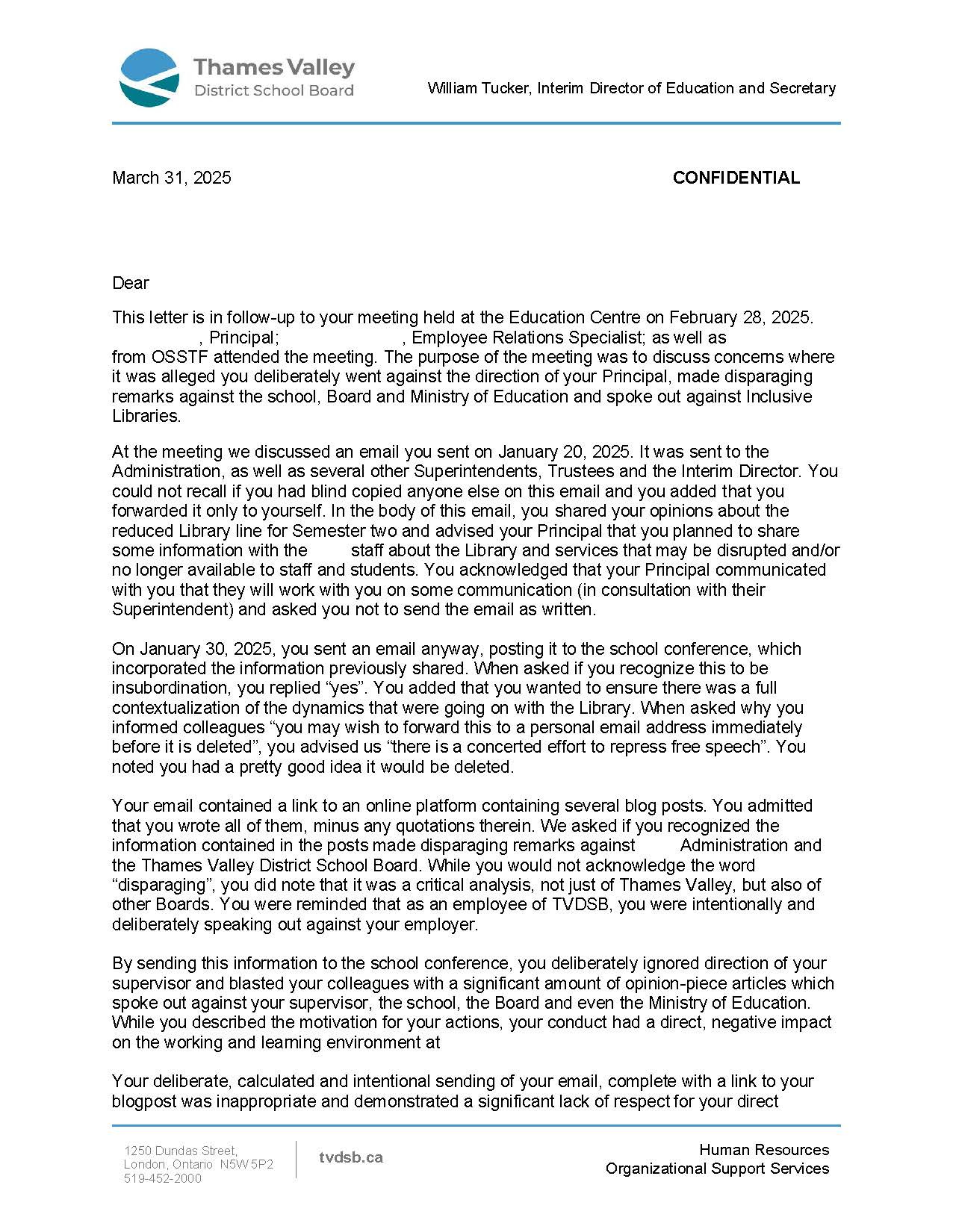
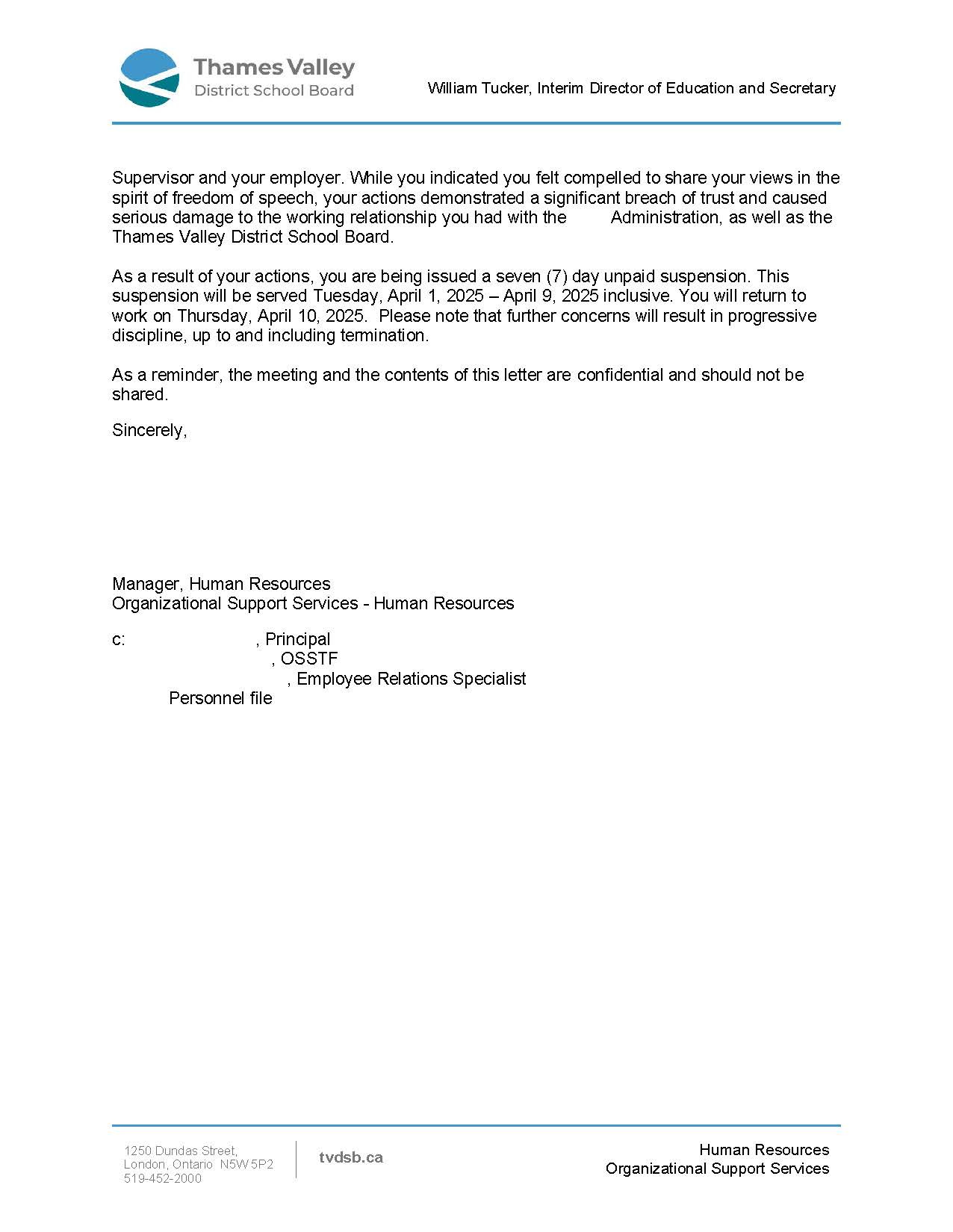
Foremost, to be clear, I did not “speak out” against “Inclusive Libraries.” What I spoke up about was the intolerable censorship that is the real effect of implementing this damaging agenda of “Inclusive Libraries,” as non-instructional and unqualified support personnel take it upon themselves to decree what is and what is not “harmful” and pursue and implement a wider agenda driven by an ideological contagion that has the net outcome of censorship.
That’s not tolerable or sustainable in a society presumably based on the unalienable (pronounced un-a-lien-able) right and freedom to choose.
I’ve addressed this more fully in Part One, but to briefly summarise, for context and clarity, in a secondary school Library, I contend everything that is age appropriate and legally permissible is fair game for students to choose and access.
The freedom to choose what to read is the paramount consideration for selection criteria, not propagandised ideology, or this notion that purging Library books somehow addresses the populist and misguided “colonialism” mantra.
The perverse irony and hypocrisy is that the actions of this board and others to remove books it deems “harmful” is as every bit colonial as the historical colonialism the revisionism thought police decry.
A wide variety of literature including controversial and perhaps objectionable (to some) content is absolutely necessary to ensure students have access to historical and contemporary, comparative and contextual thought and discourse.
There is plenty of “approved” material currently available in school Libraries that is extremely offensive to some people, but it’s there because to deny access denies freedom to choose.
That’s another perverse irony and hypocrisy of “equity,” as material deemed “harmful” to some and removed is not regarded as harmful to others, and once removed denies those individuals the freedom to choose and access that material.
That is, unequivocally, antithetical to the board’s assertion of equitable access to resources, and is undeniably censorship.
In its “Highlights for the 2025-2026 school year” message to staff on August 27, TVDSB made the statement, “TVDSB is committed to upholding everyone’s Human Rights and focusing on equitable practices, access to resources, and educational outcomes.”
Just because it is in print doesn’t make it so.
Actions, not words.
I’ll repeat the quotation I shared from Part One because it sharply conveys a Library’s mission and purpose:
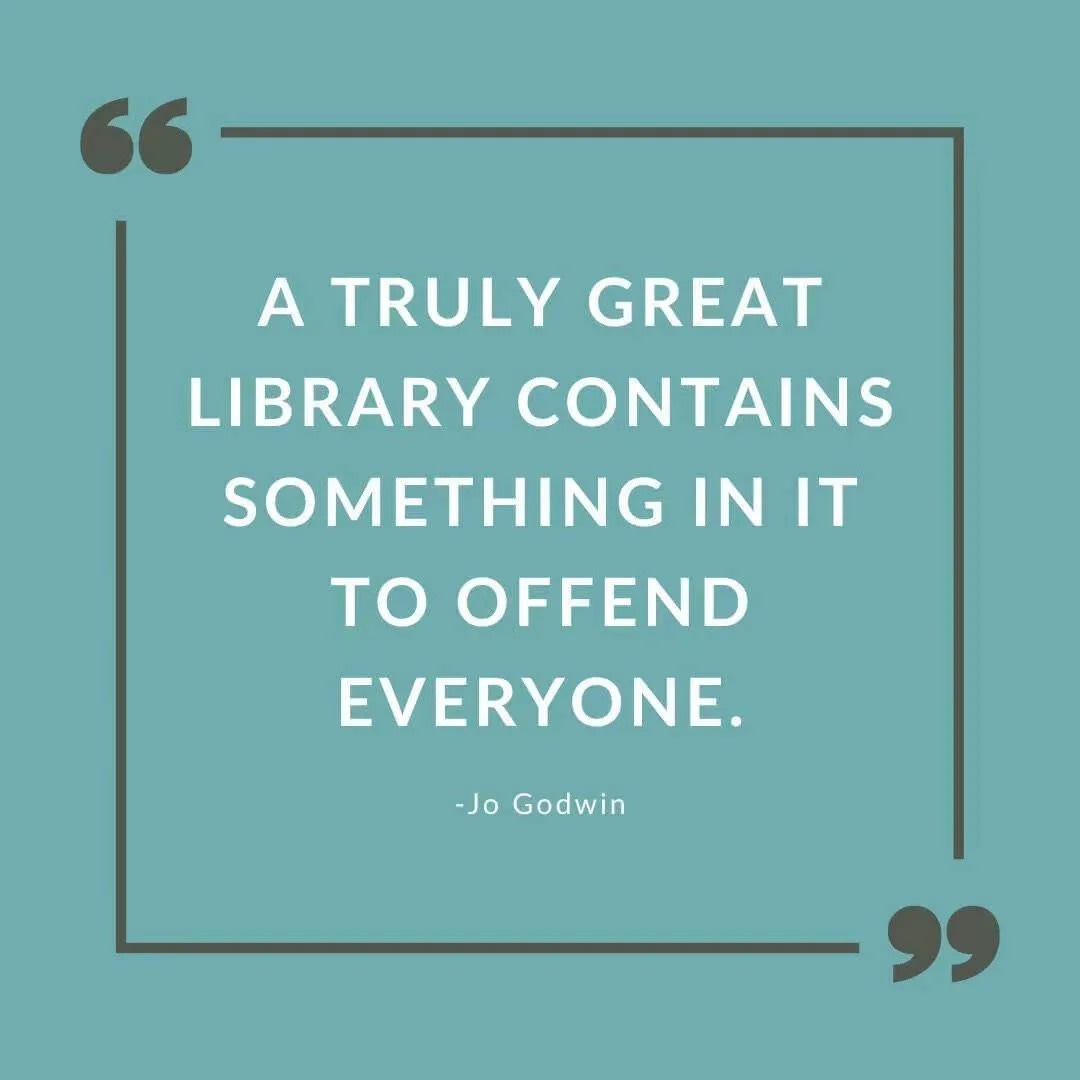
The meaning and intent of that statement should not be misinterpreted. The mission and purpose of the Library is obviously not to offend, but that may be the outcome for an individual, entirely dependent on many factors including their world view, religion and perspective, and many others.
However, Library reading material is entirely self-selecting; no one forces anyone to read anything, and it is nobody’s business what a person may choose to read.
The mission and purpose of the Library is to remain ideologically and politically neutral and to facilitate the freedom of choice.
I will always defend the freedom to choose what to read, full stop.
Discipline & Damage
As noted, I was issued a 7-day unpaid suspension for causing “serious damage,” after two months of Home Assignment.
I’ve already alluded to the reputational damage this board is experiencing, almost daily, directly as a consequence of actions by its ‘senior administration,’ some of whom it was reported went on paid leave following the publication of the scandal.
ANALYSIS: Public school board officials' stadium stay hurts public trust
Days after classes resume, Thames Valley school board director takes leave
Book Purge Round Two: Another 5,000, Gone
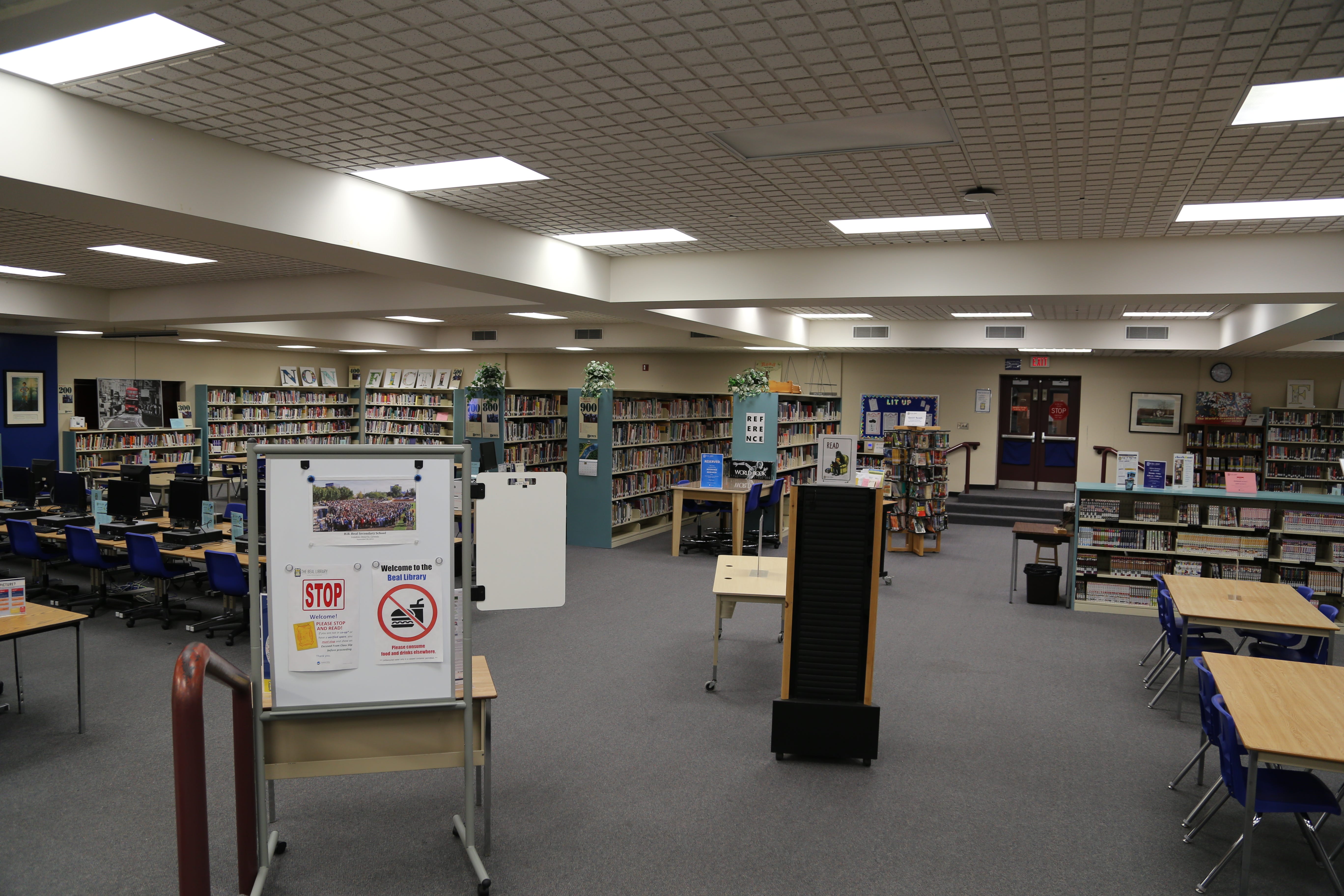
To briefly recap from Part One, on the morning of Friday, January 24, 2025 during the exam period, and for three days, board personnel including four Library Services support staff, a Learning Coordinator and a System Principal entered the Beal Library and wantonly destroyed thousands of books, ostensibly for the “harm” they posed to students as these employees deemed, as well as books they deemed too old, among other undocumented rationale, as an implementation of the “Inclusive Libraries Revitalization Project.”
The Interim Director (at the time) personally bore witness to this book purge when he visited on the morning of Monday, January 27. It is not known whether his presence was symbolic of solidarity or to observe the purging operation for himself. Somehow he knew about it, and he certainly did nothing to stop it.
That event, in part, prompted Part One.
It was thought the Library book-burning carnage was finished.
However, that was not the case, and that has prompted Part Two and this open letter.
Unbeknownst to anyone, without any advance notice, support staff again entered the Library on Monday, March 10, under the surreptitious cover of March Break when no one was present to witness their clandestine operation, and for four days proceeded to destroy many more thousands of books, decimating the collection.
This included the destruction and/or theft of numerous priceless titles, given that the school is 113 years old and therefore had a well-established and comprehensive collection of historical importance. Despite the repeated insistence by a support staffer that “a Library is not an archive,” indeed, a Library IS a vital repository of information and knowledge and a historical record to be protected, regardless whether an individual likes that particular knowledge or viewpoint or not.
This is especially true in this digital age, and its ease for inviting and facilitating revisionism by those wielding certain power, privilege and position, to simply delete or revise content they dislike.
That makes the permanence of the printed record all the more vitally important to protect.
Outdated data is one thing, and beyond the books deemed '“harmful,” it appears many books were tossed solely because of their age and publication date, presumably in pursuit of adjusting that contextless and meaningless “collection age” nonsense. For reference, pre-purge the collection age was 1999; post-purge it is 2007. That’s an eight year bump at the expense of destroying thousands of books and their unrecoverable monetary value and historical value, for something that is generally irrelevant in practical terms, despite the propaganda from ideologically-hijacked and compromised Library associations and advocacy organisations.
Between the January and March “deselection” operations, all told over 10,000 books were destroyed, worth hundreds of thousands of dollars. This figure is highly under-represented as the dollar values are often missing, inaccurate, and most importantly do not account for current replacement value. Many books are irreplaceable.
Interestingly, the board typically likes to publicly announce its initiatives and projects, but you won’t find a public announcement of the “Inclusive Libraries Revitalization Project.” Why do you suppose that is? Perhaps because of what “deselection” means, both from a public perception perspective and the actual reality of destroying school assets, and, for anyone reading between the lines, the extremely polarising issue of censorship. It is the commission of omission. I don’t believe even trustees were made aware of this project.
All this, in a board that is and has been financially mismanaged (the blame does not rest entirely with trustees, incidentally) and has been the subject of a provincial management audit.
For review, here is just a selection of headlines from the past year:
Queen's Park to audit Thames Valley school board amid stadium retreat fallout
Thames Valley school board spent $225K on Navigator PR firm. Why?
Why did the Thames Valley school board spend $300K on lawyers last month?
Queen's Park taking control of embattled Thames Valley school board
School board probe found unapproved promotions, COVID stipends
Minister blasts trustees as London-area school board’s red ink swells
And their priority is to ransack school Libraries and destroy books.
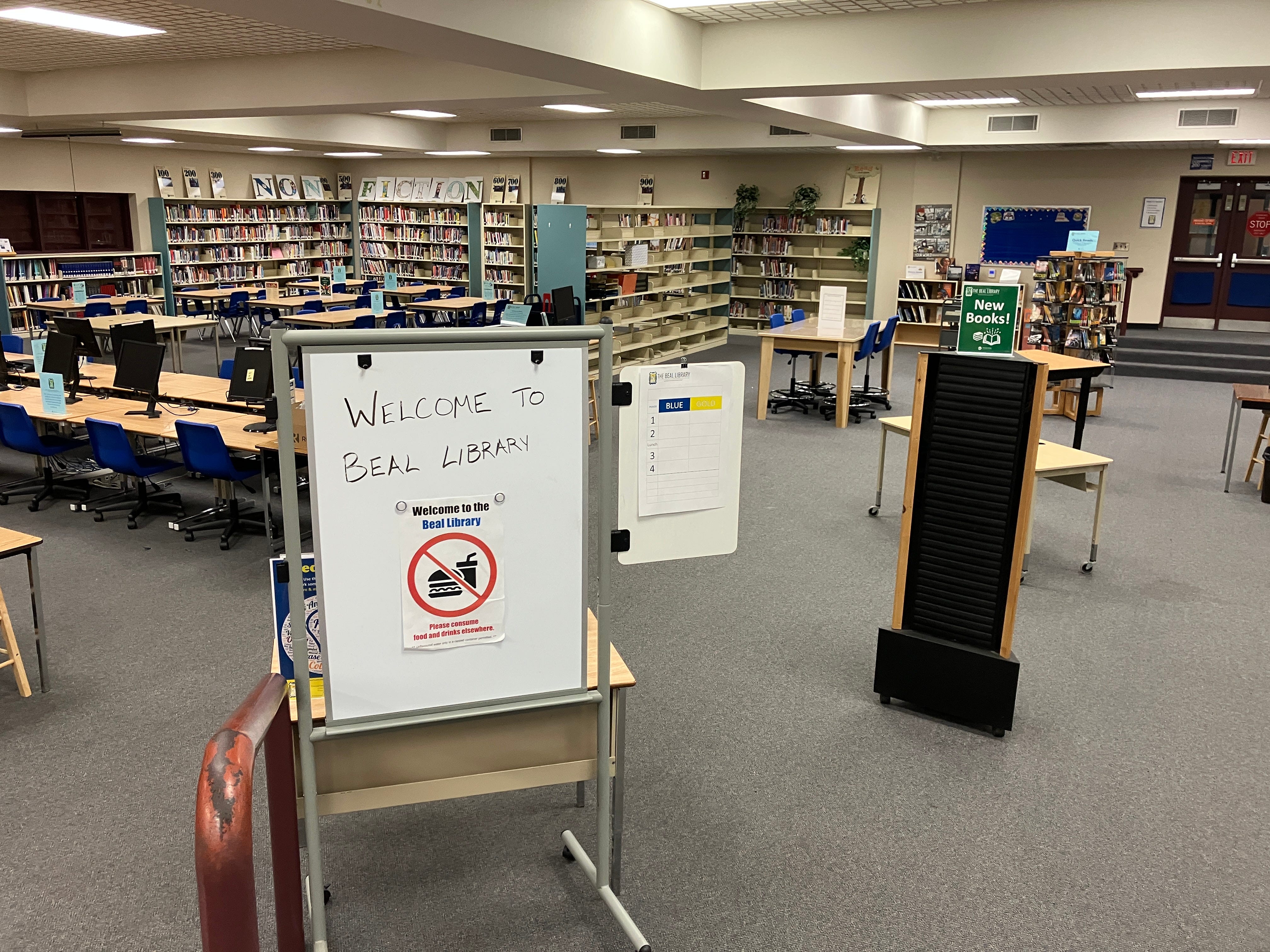
Library Learning Commons (LLC)
I need to touch on this as it becomes a relevant topic further on.
Over a decade ago, the US-imported ‘Learning Commons’ concept was forcibly injected into the TVDSB, and ushered in an era of turning the Library learning classroom into a free-for-all social hang-out to pursue any manner of arts and crafts (‘makerspace’) and the like.
Perhaps an argument could be made for its application at an elementary school level, but not for secondary or post-secondary, where a Library should be a reserved space for the pursuit of knowledge and curriculum support primarily, and quiet reflection, introspection and independent exploration. After all, the primary purpose is academic achievement culminating in earning the Ontario Secondary School Diploma, and an accessible and properly-resourced school Library (staffing and materials) supports that pursuit. There are plenty of areas in a school environment to socialise and pursue recreational activities, and a teacher-librarian is not a social convener.
As well, the term ‘Library Learning Commons’ is exclusionary, as every space within a school’s four walls is a learning commons, and there is no special designation necessary for an already-aptly-named Library.
Most importantly, instead of focusing limited resources on prioritising explicit literacy initiatives and programming, purchasing support material (books), and the crucial need for teaching and consistently reinforcing enhanced research and inquiry skills in the digital information age, funding was diverted and school Libraries were physically renovated at great expense (versus investment) and transformed with “green screen” rooms (some I understand now used for storage), flexible furniture for “collaboration,” and reduced book collections.
That may be somewhat an over-simplification, but the net effect was there was no funding for teacher-librarian professional development, Library curriculum and resource development, and ultimately delivering practical resources to support student learning.
It was, and is, a reckless waste and misdirection of funds I could not, would not, and did not embrace and support.
I will only ever refer to the Library as the Library.
OLA
I include this to provide some relevance and context.
One of the primary pushers of the agendas such as LLCs and ‘inclusive’ Libraries is the Ontario Library Association, an umbrella advocacy organisation. One of its divisions is OSLA, representing school Libraries.
This banner from the OLA Web site instantly reveals basically everything you need to know about its ideology-driven agenda and its priorities:


In its recent OLA Strategic Plan 2025-2028, it states, “OLA recognizes that the principles of decolonization, equity, diversity, and inclusion, are foundational values to our association and sector, and have centered them throughout this strategic plan.” (p. 3)
What proponents of this agenda fail to recognise, or acknowledge, is that the practical outcome of pursuing “decolonization, equity, diversity, and inclusion” achieves precisely the opposite: recolonisation, inequity, uniformity, division and exclusion.
The only difference is perspective, and ideology, and most of all, who is in control of the levers of power and therefore influences, and dictates, policy direction.
None of it achieves the social harmony we all desire, and the roadkill in the meantime is substantive and impactful…
…including the freedom to choose what to read in a Library, any Library.
What’s curiously missing from that strategic plan is no mention of the freedom to read, surely a core element of a Library. “Intellectual freedom” is mentioned twice without any contextual or practical definition, nor does “read” appear anywhere in the OLA’s Values.
Library advocacy without any mention of reading?
It’s hard to believe that is an oversight, which raises serious concerns about what is going on with an organisation purportedly promoting and advocating for Libraries.
When Libraries (or rather Librarians and Teacher-Librarians) are no longer neutral and assume the role of pushing certain ideologies and agendas, they have become arbiters, agents and institutions of indoctrination and dogma, instead of custodians of information and access, preservers, protectors and promoters of independent thought and intellectual freedom and most critically the freedom to choose what to read.
It is a fundamental betrayal of the purpose of the Library.
There is an important role for OLA’s advocacy for Libraries and shrinking resources, but it (along with other Library associations) has been hijacked and infiltrated by a politically-motivated agenda that is taking the OLA, OSLA and all Libraries aligned with this “strategic plan” (including TVDSB) in a dangerous direction.
School Library Staffing, Part Two
In Part One I outlined how historically secondary school Library staffing has been funded and allocated.
I’ve included this as it is a relevant follow-up to what I shared, and is a contributing factor to my decision to retire.
At the April PA day, the principal shared a slide showing some staffing numbers for 2025-2026.
One line stuck out:
“Library 1.33 FTE (protected; cannot be changed)”
1.33 FTE equates to 8 lines, one for each of the 4 periods each semester, and is the conventional allocation for the school’s projected enrollment (ADE).
It was the “protected; cannot be changed” which was surprising. Never before have Library lines been protected. Usually they have served as the subsidisation slush fund for a principal’s pet project, an on-going bone of contention I legitimately defined as program “theft” in Part One.
At the same meeting it was announced that vice-principals at larger schools would be assigned teaching lines, in a cost-saving move for a fiscally-mismanaged board looking for ways to trim costs.
At the time I did not connect the dots.
When the line assignments came a few weeks later, it became very clear what that “protected” actually means.
On the timetable paper I was assigned four lines (usually a full-time department head would be assigned 6 when there are sufficient departmental lines available), a colleague was assigned two, and the remaining two were unassigned. I later learned I was assigned to the English department for the other two lines.
When I inquired from the union in-school staffing representative, it was confirmed where those two lines went; one Library line each had been assigned to a VP, with the following rationale:
admin attempted to schedule teachers based on qualifications
a Library assignment was “not overly student-facing” and doesn’t have lesson prep and marking
least disruptive to students
Excepting the first bullet point, as offensive, dismissive, ignorant and debasing to the teacher-librarian role as the other two are, the real kick-in-the-pants came next.
It was stated that because of my position on the ‘Library Learning Commons’ model (described above), a more compatible (and compliant) colleague should be assigned two lines to try and align program with the board’s “directive” and more likely to move forward with LLC-compatible initiatives.
In other words, I was being actively punished because I viewed and managed the Library as a purpose-driven extension classroom with a focus on curricular purposes and not a social hang-out. In fact, at my re-entry meeting following the suspension, the acting principal stated students felt “unwelcome.” The union representative responded, “Who did you ask?” Context. But indicative. It’s the same person who made the line assignments.
What really takes the cake though is that neither of the assigned VPs, as of this writing, has Library qualifications, which makes a complete mockery of the administration’s statement about staffing assignments based on qualifications.
Even after the union pursued this sticky issue and the board confirmed Library qualifications are required, there has been no change in assignments.
“Do as I say, not as I do.”
For added insult, and to reinforce the real purpose of what “protected” really means, this exact Library staffing scenario is repeated in at least four other large secondary schools with an 8-line Library staffing allocation.
To be super clear, this means unqualified VPs, who are also not Members of the union (unless in an acting role) are taking teaching jobs from qualified teachers. It’s a two-fer.
It’s also notable that in the elementary panel where this sort of thing has been going on for years – VPs assigned to Library allocations – the Library is often closed to students when administrative priorities dictate they ‘need’ to be elsewhere. I predict the same approach will apply to secondary school Libraries, deemed as non-essential and expendable.
None of this program theft and shenanigans is surprising; it’s just another in a string of typical dynamics that plague an administration characterised by self-serving entitlement and protecting (and rewarding) themselves.
Computer Technology Waste
Beyond the censorship implications, tossing good books worth thousands of dollars is concerning enough.
On a related note, you’d think a board in such dire financial straits would look to creative ways of saving money.
Not so.
Numerous examples of waste abound (like the ridiculous monogrammed paper towels and new dispensers deployed throughout the board last spring), but perhaps the most visible – even beyond the destruction of books – is the purge of thousands of computers because of an apparent impending doomsday of Microsoft’s Windows 10 no longer receiving updates later this fall.
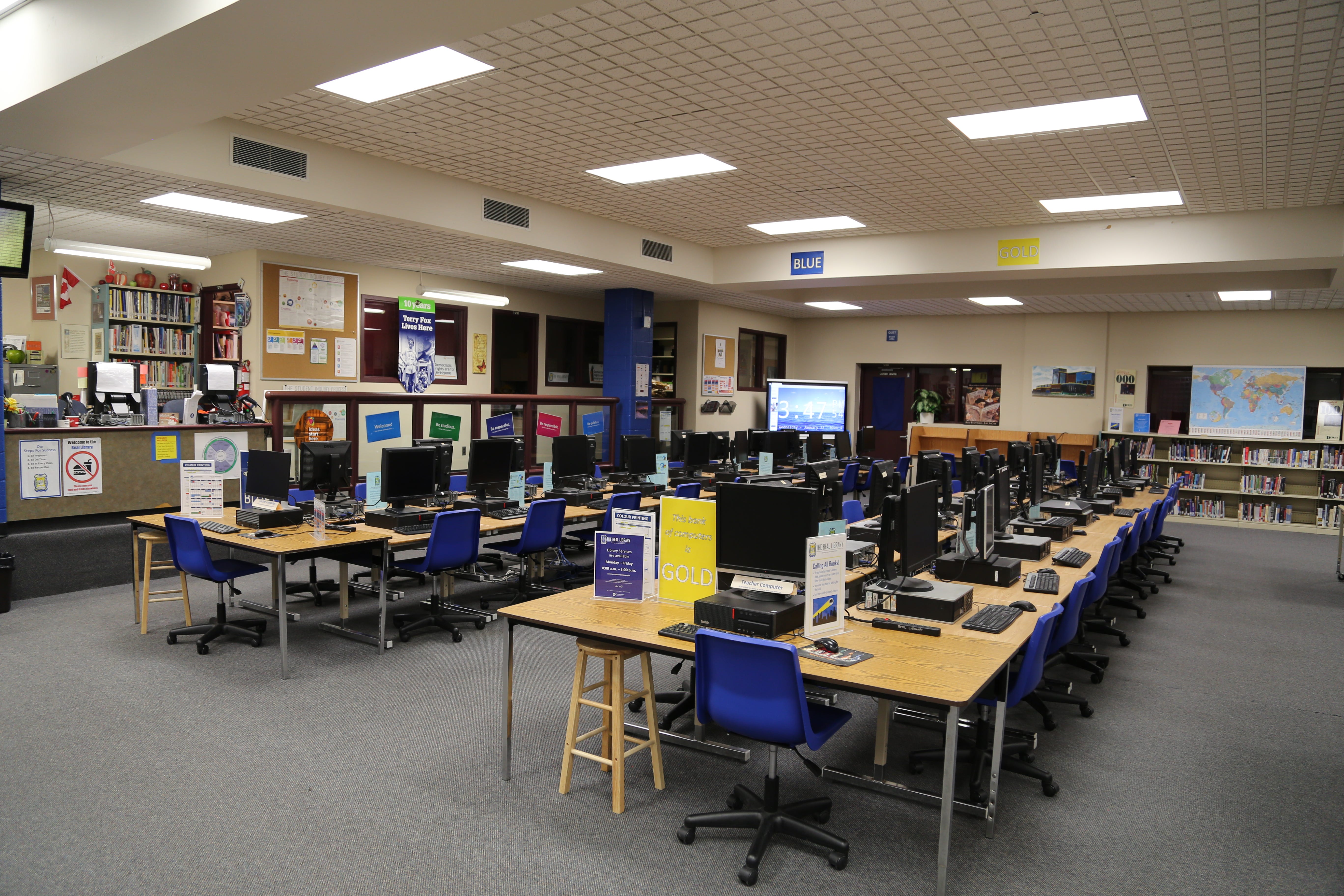
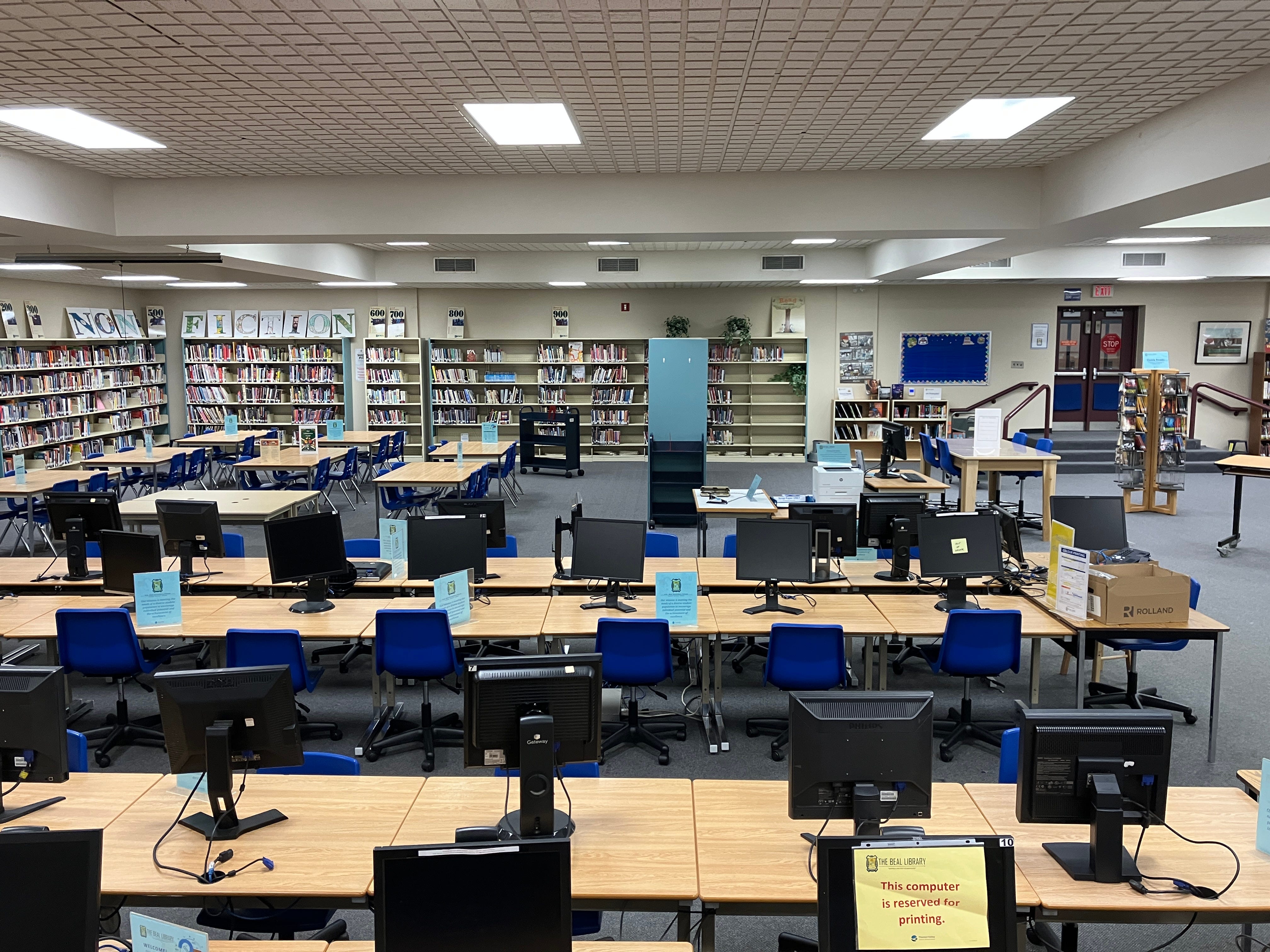
Instead of seeking easily-implemented, viable and free alternatives (i.e., Linux or ChromeOS) to extend the life of existing computers, their solution is to throw out perfectly functional desktops and laptops. E-waste bins are overflowing with discarded machines.
Beal Library lost 40 student desktops. Although 32 new laptops were received, there is a net loss.
As well, there is the failure to fully understand the practical and financial implications of laptops in a shared user environment; laptop functional lifetimes are already significantly less than a desktop, and add to that the handling impacts of computers not designed for this multi-user environment it is clearly a financially ill-advised, irresponsible and short-sighted expenditure, not an investment. Desktop computers in the classroom context are far more practical and a much better ROI.
Desktop PCs are also far superior from a pedagogical and classroom management (and time management) context.
It’s another representation of a management layer completely disconnected – and clearly uninterested – in the fiscal realities, let alone the practical realities for staff and students.
These are people who sit in their ivory tower with their own generally current desktop or laptop, and therefore have zero appreciation or situational awareness for what actually goes on in the front lines.
I believe it’s also a case where out of ignorance and fear of the unknown and unfamiliar that the administration defers to the technology ‘experts,’ at the considerable expense of instructional priorities.
It should be the other way around, with IT taking direction from whatever curricular and student learning needs dictate.
Epilogue
It bears repeating: Because my former employer is a public entity, I believe in public accountability and full transparency.
That’s the purpose of this open letter.
I have conveyed just a few examples of extraordinary waste within my little corner of the education scene in one board, and I am certain there are many more.
Whether it’s the removal of books under the guise of “harm” or age or the removal of professional, qualified staffing from a school Library, or other wasteful implementations, the impact on students is tangible and undeniable.
For a board that claims to put students first and claims to uphold Human Rights (debatable given past personal experience, for another time), it’s actions, not words, that reveal true intentions, priorities and realities.
And culture.
In a recent message to all TVDSB staff, Education Director Bill Tucker writes,
“Without doubt, the last year brought its share of challenges and while I anticipate more changes may lie ahead, it is my intention to move forward with optimism and purpose. Of prime importance to me is to continue the work in changing the culture of our organization so that every employee feels seen, respected and integral in our educational system. However, this is not a one-person responsibility. We all play a role in the evolution of that cultural shift. And I believe that together we can get there!”
– August 25, 2025
A culture shift is certainly a welcome change, but in my experience, in more recent years there has been little interest in dialogue or collaboration demonstrated, and a lot of overt and covert entitlement, with a few examples as outlined above.
Notably, what’s missing from Mr. Tucker’s rosy pep-talk is any mention of accountability, even in the midst of an Education Minister-appointed supervisor to manage its affairs.
In his start-up letter to the TVDSB community, Minister Calandra addresses the financial mismanagement, and graphically illustrates the visible (exposed) waste:
“That’s why we placed the Thames Valley District School Board (TVDSB) under supervision following an investigation by a ministry-appointed third party, which revealed the board was projecting an accumulated deficit for the 2024–25 school year, indicated a probable accumulated deficit continuing into the 2025–26 school year, and raised concerns of potential financial mismanagement. This included a nearly $40,000 retreat for senior officials in downtown Toronto despite the board’s ongoing deficits. The 2024-25 projected deficit has now nearly doubled to $32 million, confirming the need for tighter fiscal oversight at the board.”
– The Honourable Paul Calandra, Ontario Minister of Education, August 28, 2025
Is Mr. Calandra aware of the invisible (to the public) mismanagement and waste?
He goes on to say, “I have made it clear that if a school board veers from its mandate, I will act quickly to restore focus, rebuild trust and put students first.”
That remains to be seen, with an ingrained culture of entitlement.
While I do not presently share Mr. Tucker’s laudable optimism for a shift in culture, I can appreciate how he has swooped in to try and save TVDSB. I can’t fault him for that, but neither can I offer praise, given that he has presided over (and personally witnessed) the objectionable theft and destruction of valuable resources, including thousands of books and computers on his watch, ultimately removing and denying those learning opportunities for students.
I contend both as a former employee and a taxpayer public witness that TVDSB is terminally corrupted beyond repair at the system and administration levels.
However, I do have faith and trust in my dedicated classroom teacher and many education worker colleagues that, given the opportunity, professional courtesy and latitude, they will be the ones to right the sinking ship and steer its course forward.
To give some benefit of the doubt, if there can be any salvation for and salvaging of TVDSB, let’s hope that evolution of “cultural shift” really can happen, and that students and student learning – and their rights and freedoms – are always considered foremost, in word and in action.
FOOTNOTE:
On Banning Books by Ira Wells
At the time of writing Part One, On Banning Books was a forthcoming publication, which I referenced at the bottom of the post.
In a direct parallel to the book-banning and -purging agenda of my former employer, an Ontario father becomes involved with his children’s elementary school Library and its “expurgation,” and takes to penning an exposé of the growing attempts to silence opposing and controversial viewpoints.
“The freedom to read is under attack.”
It is an excellent read, and the author is to be commended for drawing crucial public awareness to this alarming scourge, and attack on the freedom to read.
“On Book Banning is both rallying cry and guide to resistance for those
who will always insist upon reading for themselves.”
– back cover

Our library has been reduced to nothing. Books are on a rack, outside of the library, free for the taking. Sad.